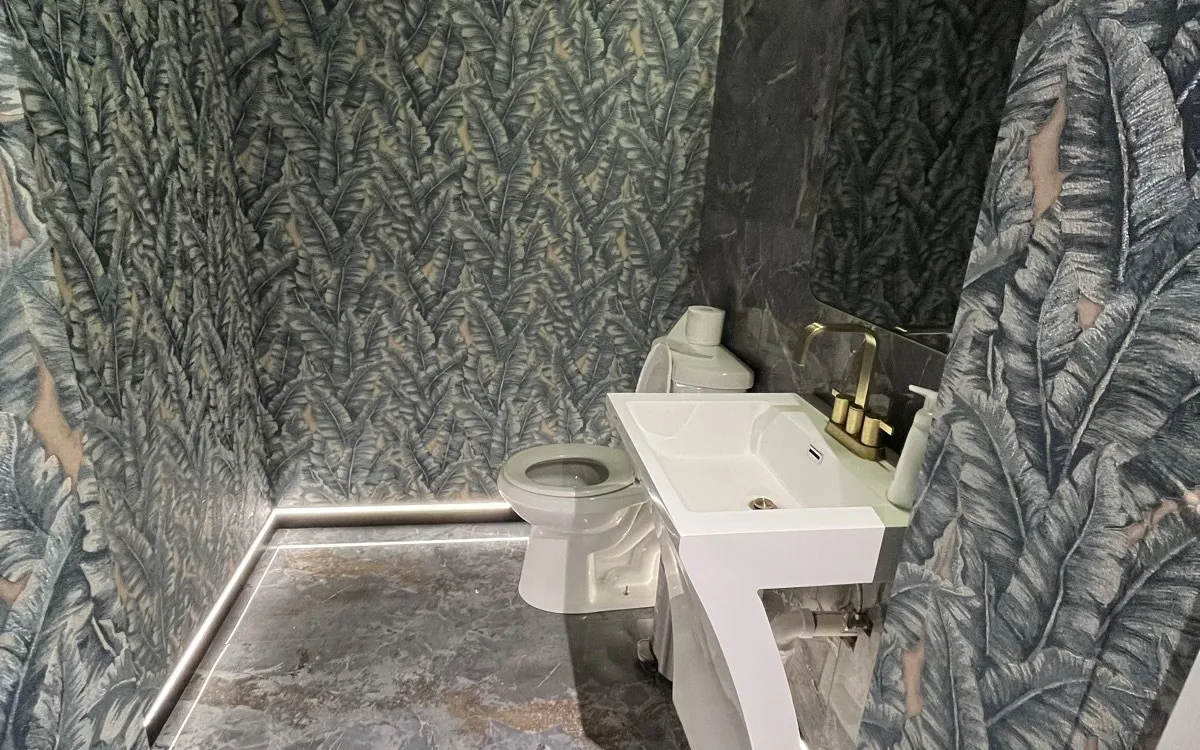
Wallpaper — or more accurately, the broad category of decorative wall treatments — has moved well past the stigma of 1980s foil prints and the painful steaming sessions required to remove them. Modern wallpaper products are more durable, more moisture-tolerant, and far easier to remove than anything your parents hung. For DMV homeowners renovating a powder room, primary bedroom, dining room, or office, the right wall treatment can define a room's character more than almost any other single decision. Here's what to know before you choose.
Types of Wallpaper: How the Main Options Compare
Not all wallpaper is the same material, and the differences matter for durability, moisture resistance, and removal when you're ready for a change:
- Vinyl wallpaper: The most common residential option in the US market. A fabric or paper backing is coated with a vinyl face layer that is scrubbable, moisture-resistant, and holds printed patterns crisply. Suitable for most rooms, including bathrooms with proper ventilation. Cost: $2–$8 per sq ft for the material; $5–$10 per sq ft installed.
- Grasscloth and natural fiber: Woven from jute, seagrass, sisal, or raffia, then backed with paper. Produces a textured, organic surface that reads differently than any paint or printed pattern. The downside: natural fibers are not moisture-tolerant, seams are more visible than on printed wallpaper, and cleaning must be done carefully without saturating the material. Not recommended for bathrooms or humid basements. Cost: $5–$15 per sq ft material; higher installation cost due to pattern-matching complexity.
- Fabric-backed wallpaper: The professional-grade option, with a woven cloth backing rather than paper. More dimensionally stable, less prone to tearing during installation, and extremely durable once hung. Often specified for high-traffic areas — a hotel corridor, a stairwell, a dining room that gets daily use. Cost: $6–$20 per sq ft material.
- Peel-and-stick (removable) wallpaper: A self-adhesive product designed for renters or homeowners who want a non-permanent solution. The honest assessment: peel-and-stick products work reasonably well on smooth, primed drywall but tend to lift at seams over time, especially in humid environments like the DMV's summer climate. Not a substitute for professionally applied wallpaper in a permanent renovation, but a reasonable option for a nursery, a rental, or a space you're testing a pattern in before committing. Cost: $1–$4 per sq ft; typically a DIY application.
DMV Climate Considerations: Humidity Is the Enemy
The DC, Maryland, and Virginia region has a humid subtropical climate — summers regularly push 90% relative humidity, and many older homes have fluctuating indoor humidity that tax wall treatments. Key rules:
- In bathrooms: use only vinyl or vinyl-coated wallpaper products rated for wet or high-humidity areas, and ensure the exhaust fan is properly sized and vented to the exterior, not into the attic.
- In basements: wallpaper over concrete or block is inadvisable unless the wall has been properly furred out, vapor-managed, and is demonstrably dry. A basement that shows any seasonal moisture should be addressed at the waterproofing layer before any finish treatment is applied.
- In older homes (pre-1980): plaster walls should be assessed for stability. Loose or cracked plaster that was painted over will telegraph through new wallpaper; proper repair or a skim coat before hanging is worth the investment.
Surface Preparation: The Step That Determines the Outcome
Wallpaper is unforgiving of surface imperfections in a way that paint is not. Every joint, fastener dimple, and seam in the drywall will show through thin or glossy wallpaper under raking light. Professional installation includes:
- Skim-coating the wall surface (filling and feathering any imperfections)
- Sanding smooth and priming with a wallpaper-specific primer (not standard latex primer, which allows the paper backing to absorb too much moisture during installation)
- Sizing the wall (a thin layer of diluted adhesive that controls absorption and extends working time)
- Careful seam placement — a skilled installer plans drops to minimize visible seams and centers patterns in the focal wall of the room
DIY wallpaper installation is achievable in a small room with a simple pattern, but a powder room with two to three wall breaks and a complex large-scale pattern (like a tropical botanical or a geometric) is far less forgiving of inexperience.
Statement Rooms: Where Wallpaper Has the Most Impact
Wallpaper works in any room, but three spaces have emerged as particularly high-impact applications in DMV renovation projects:
- Powder rooms: Small square footage means the material cost is manageable ($150–$400 in wallpaper for a typical powder room) while the visual impact is outsized. A bold botanical, a graphic geometric, or a textured grasscloth in a powder room draws more attention and generates more conversation than the same investment spread across a living room. Because powder rooms are used briefly and infrequently, natural fiber wallpapers that wouldn't survive a primary bath work well here.
- Dining rooms: In colonial and craftsman homes common across Bethesda, Chevy Chase, Alexandria, and Northern Virginia neighborhoods, a formal dining room is one of the few spaces where a richly patterned wallpaper — damask, toile, a rich botanical — fits the architectural character of the room.
- Home offices: An accent wall in a home office — particularly one that appears in video calls — is a high-return application. A single wallpapered wall behind a desk creates a finished, professional backdrop with minimal material cost.
What Wallpaper Projects Cost in the DMV
- Powder room (full walls, professional installation): $800–$2,500 including material and labor
- Bedroom accent wall: $600–$1,800 depending on wall size and pattern complexity
- Full dining room (4 walls): $2,500–$6,000 for a 12×14 room with a patterned paper
- Surface prep (skim coat + wallpaper primer, if needed): $3–$5 per sq ft additional
- Wallpaper removal only (existing paper before new renovation): $1–$3 per sq ft, higher for multiple layers or older papers that have been painted over
Ready to Transform a Room?
Donya LLC is a licensed and insured design-build contractor serving Washington DC, Maryland, and Northern Virginia (MHIC #159903). Our interior renovation service includes surface preparation, wallpaper installation, and all finish work as part of coordinated room renovations. Call (301) 337-9445 or email Reza@donyallc.com to discuss your project.