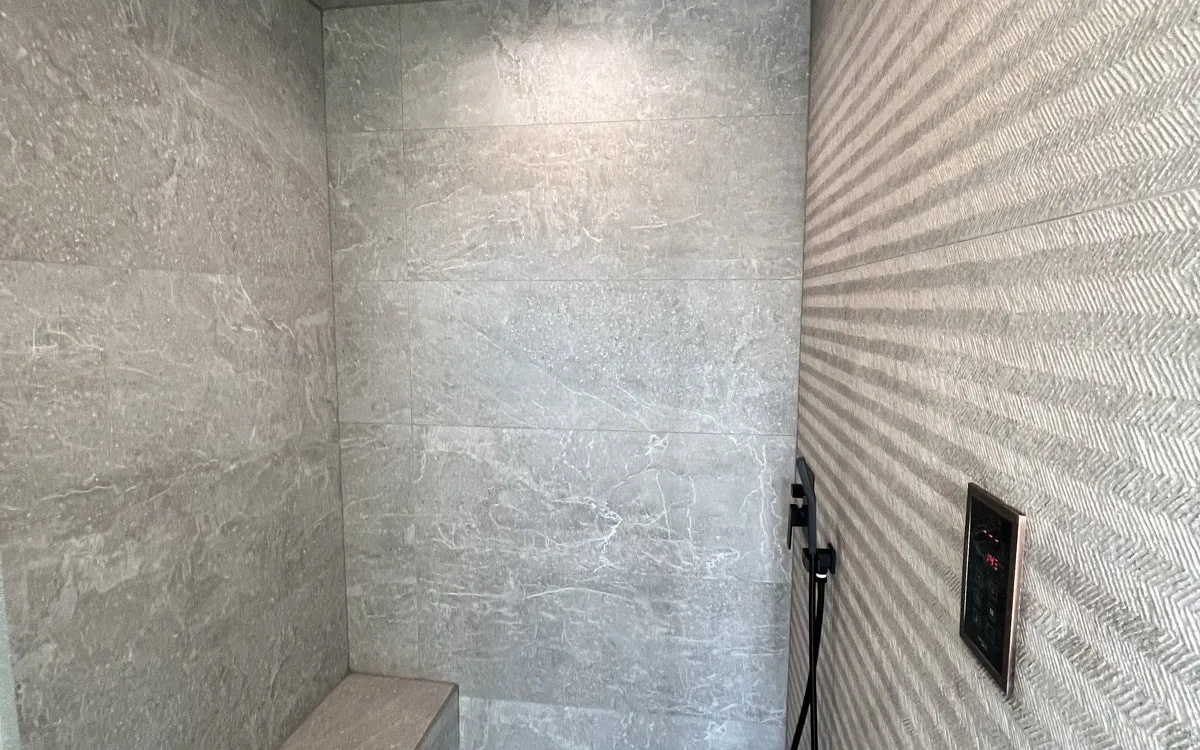
A steam shower is not an upgraded walk-in shower — it's a distinct plumbing system with its own set of requirements for enclosure, tiling, ventilation, and electrical service. Homeowners who plan a primary bathroom renovation in the DC, Maryland, and Virginia area and want to include steam need to understand what the system actually requires before they finalize layout, tile selection, or cabinetry dimensions. Here's what a steam shower is, what it takes to build one correctly, and what it costs in the current DMV renovation market.
How a Steam Shower Differs from a Standard Walk-In Shower
A standard walk-in shower uses water at the showerhead only; the enclosure is wet-area construction designed to manage water spray and drainage. A steam shower uses a remote steam generator — typically a unit the size of a small suitcase, installed in a nearby cabinet or utility space — to boil water and deliver steam through a dedicated steam head mounted low on the shower wall. The enclosure must be fully sealed against steam migration, which penetrates materials in ways that water spray does not.
The practical implications of this difference drive every technical requirement for steam shower construction:
- The ceiling must be tiled (not painted drywall or waterproof membrane alone) and must slope slightly toward the walls so condensed steam drips to the edges rather than dripping straight down onto the user
- The door must seal fully — a steam shower door requires a full-perimeter sweep and seal, unlike frameless shower glass which commonly has small gaps at the bottom
- The enclosure must be completely closed: no exterior windows, no open niches that penetrate the steam envelope, no vent fans operating during steam use
- The steam generator requires a dedicated 240V electrical circuit and a cold-water supply line run to its installed location
- Control panels — which regulate steam duration, temperature, and optional features like chromotherapy lighting or aromatherapy injection — are typically flush-mounted in the shower wall and require low-voltage wiring
Enclosure Size and Ceiling Height
Steam efficiency is directly proportional to enclosure volume: a larger enclosure requires a more powerful (and more expensive) generator to reach therapeutic steam temperatures. Generator output is rated in kilowatts (kW) and is matched to the cubic footage of the enclosure, adjusted upward for stone tile (which absorbs heat) and glass walls (which conduct heat away). Most residential steam shower enclosures are sized between 80 and 450 cubic feet; a standard 4×4×8-foot enclosure runs approximately 128 cubic feet and requires a 7–9 kW generator. Larger spa-style enclosures (6×6×9 feet or above) may require 10–15 kW systems.
Ceiling height matters more in a steam shower than in a standard shower. A ceiling above 8 feet creates a large volume of cold air at the top that the steam generator must overcome before the space reaches effective temperature — most designers cap steam shower ceiling height at 8 feet and slope the ceiling to the low point at one wall rather than building a standard flat-ceiling enclosure at a taller height.
Tile and Material Selection
The tile specification for a steam shower differs from a standard wet-area shower in several ways:
- Ceiling tile is not optional: the ceiling in a steam shower must be finished in a waterproof material. Large-format porcelain tile (the same material used on the walls) is the most common choice and produces a seamless, visually continuous enclosure. Smaller mosaic tile on the ceiling creates the visual texture of a spa grotto and handles the ceiling slope gracefully.
- Grout porosity: standard sanded grout is not suitable for steam showers. Epoxy grout or polymer-modified grout with low water absorption is required for joints that will be subject to sustained elevated humidity. Unsealed or porous grout joints in a steam shower will fail within a few years.
- Natural stone requires sealing: marble, travertine, and other porous natural stones used in steam showers must be properly sealed on all surfaces — including the grout — and resealed on a maintenance schedule. This is a maintenance commitment, not a one-time installation step.
- Mixed textures: a common design approach uses large-format stone-look porcelain on the primary walls with a textured accent tile — a ribbed, herringbone, or sculptural face — on one wall, which provides visual interest without introducing grout maintenance complexity. Mosaic tile on the ceiling adds the spa-grade character that distinguishes a steam shower from a wet-area shower with a steam generator added.
Steam Generator and Controls
The steam generator is purchased separately from the enclosure construction and is specified by the plumbing and tile contractor in coordination with the manufacturer's sizing guidelines. Major residential steam generator brands include Kohler (Invigoration Series), Mr. Steam (iTempo), Steamist, and ThermaSol — all produce units in the 7–18 kW range with matching digital control systems. Key features to evaluate:
- Fast start time: premium generators reach steam temperature in 5–10 minutes; budget units may take 15–20 minutes, which significantly affects the user experience
- Digital control panel: flush-mounted in the shower wall, typically programmable for duration, temperature, and start scheduling. Wi-Fi-enabled panels allow the shower to be started before entering the bathroom.
- Aromatherapy port: an accessory oil reservoir that injects essential oil fragrance into the steam stream — standard on most mid-range and premium generators
- Chromotherapy lighting: colored LED lighting built into the steam head or separate enclosure fixtures; an option on premium systems
- Generator location: the unit must be within 25–60 feet of the steam head (varies by manufacturer) and must be accessible for maintenance. It is typically installed in the vanity cabinet below the sink or in a utility closet adjacent to the bathroom.
What a Steam Shower Costs in the DMV
Cost ranges for steam shower installation in DC, Maryland, and Virginia:
- Steam generator (7–10 kW, with digital controls): $1,500–$4,500 for the unit; premium brands with advanced control systems reach $5,000–$8,000
- Steam shower enclosure tile installation (walls + ceiling, standard 4×6 ft enclosure): $5,000–$12,000 installed, depending on tile material and complexity
- Steam-rated door and glass panel: $1,500–$4,000 for a fully sealed frameless glass enclosure
- Electrical work (240V circuit for generator): $400–$900 for a dedicated circuit run
- Plumbing (water supply line to generator location): $300–$700
- Complete steam shower, mid-range materials, 4×6 ft enclosure: $10,000–$20,000 total installed
- Spa-grade steam shower with premium tile, large enclosure, and top-tier generator: $20,000–$45,000+
Steam showers are typically installed as part of a primary bathroom renovation rather than as stand-alone projects — the marginal cost of adding steam to a bathroom that's already being gutted and retiled is significantly lower than retrofitting steam into an existing shower enclosure, which may require demolishing and rebuilding the enclosure to meet the sealing and ceiling requirements.
What Makes a Spa Bathroom More Than a Steam Shower
A steam shower is one component of what's broadly called a spa bathroom — a primary bathroom designed around the experience of relaxation and physical recovery rather than purely functional bathing. Other elements that appear in full spa bathroom renovations in the DMV market:
- Freestanding soaking tub: a deep soaking vessel separate from the shower, typically positioned as a visual focal point near a window. Japanese-style soaking tubs (deep, compact) and European freestanding formats (longer, shallower) are both popular.
- Heated floors: electric radiant floor heating under large-format tile; the tile substrate must be compatible with in-floor heating, and the heated area is typically limited to the wet-area floor and the vanity zone
- Towel warming: electric or hydronic towel warming bars; minimal cost to add during a renovation, significant quality-of-life return
- Sauna or infrared sauna: a separate enclosed wood-lined room or prefabricated infrared cabin; requires its own 240V circuit and, for traditional sauna, a floor drain
- Bidet or washlet toilet seat: standard in luxury hotel bathrooms in Europe and Asia; now widely available through brands like TOTO, Kohler, and Bio Bidet
Ready to Add a Steam Shower to Your Primary Bathroom?
Donya LLC is a licensed and insured design-build contractor serving Washington DC, Maryland, and Northern Virginia (MHIC #159903). Our bathroom remodel service includes steam shower enclosure design and construction, steam generator specification and installation, and full primary bathroom renovation. Call (301) 337-9445 or email Reza@donyallc.com to discuss your project.