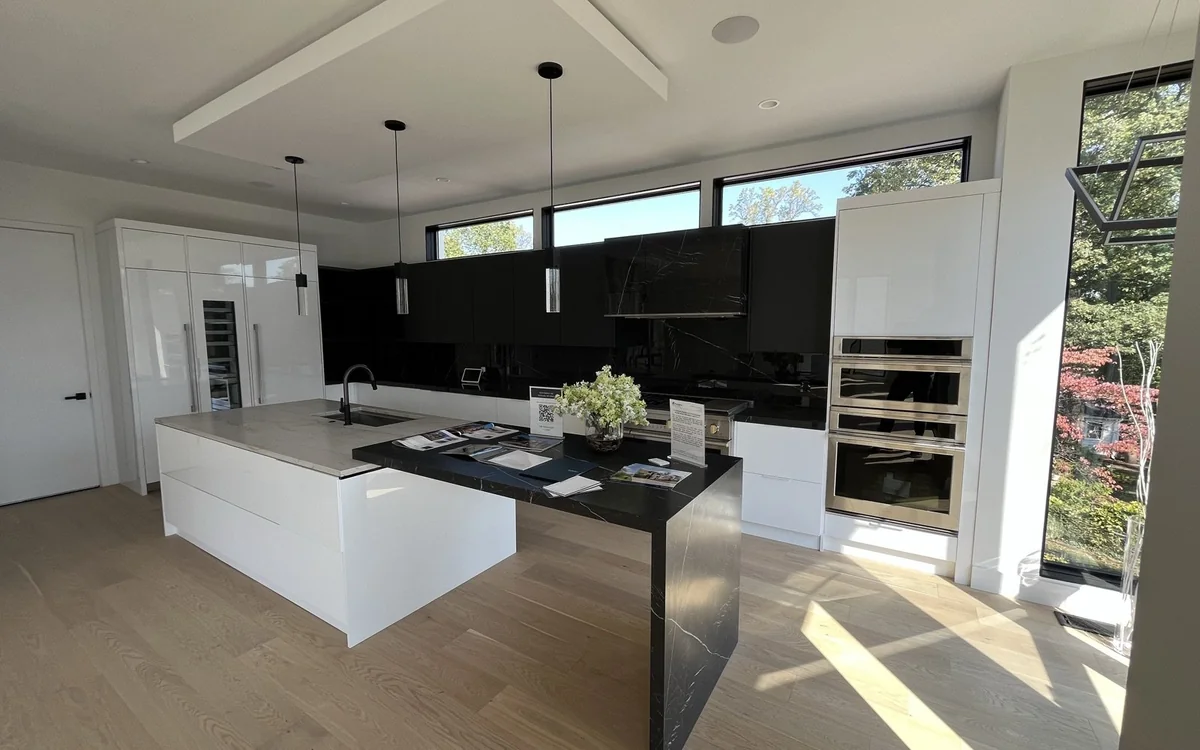
Luxury vinyl plank — commonly called LVP — has taken over the DMV remodeling market in the past five years. Walk through any recently renovated home in Bethesda, Reston, Silver Spring, or Alexandria and there's a good chance you'll see it underfoot. The appeal is straightforward: LVP looks convincingly like hardwood, holds up to moisture and heavy foot traffic, and costs significantly less than solid wood.
But not all LVP is equal. There are meaningful differences in quality, thickness, and installation method that affect how long the floor will last and how good it will look. Here's what every DMV homeowner should understand before committing to an LVP installation.
What Is LVP and How Does It Differ from Other Vinyl Flooring?
Luxury vinyl plank is a multi-layer synthetic flooring product. From bottom to top, a typical LVP board consists of a backing layer (for stability and sound absorption), a rigid core (either WPC — wood plastic composite — or SPC — stone plastic composite), a photographic layer that mimics the look of wood or stone, and a wear layer that protects the surface from scratches and stains.
The key differences compared to older sheet vinyl or peel-and-stick tiles are thickness, rigidity, and realistic appearance. LVP is dimensionally stable, meaning it doesn't stretch or shift the way thinner vinyl products do. It also installs as individual planks — either floating (click-lock) or glued down — which makes it much easier to replace damaged sections.
WPC vs. SPC: Which Core Is Right for You?
The core material is the biggest structural decision in LVP selection.
WPC (Wood Plastic Composite)
WPC cores contain a foamed material that makes the plank feel slightly softer and warmer underfoot. WPC is quieter to walk on and more comfortable for extended standing, which makes it a popular choice for living rooms and bedrooms. The trade-off is that WPC is slightly less rigid and more prone to denting under heavy furniture or point loads.
SPC (Stone Plastic Composite)
SPC cores are denser and more dimensionally stable than WPC, making them the preferred choice for high-traffic areas, commercial applications, and rooms with large temperature swings. SPC is increasingly the default recommendation for whole-home installations because it handles radiant heat systems better and is less susceptible to subfloor imperfections telegraphing through to the surface.
For most DMV homeowners doing a whole-home flooring installation, Donya LLC typically recommends SPC with a minimum 6mm total thickness and a wear layer of at least 12 mil (0.3mm). This spec provides the right balance of durability, comfort, and value.
Wear Layer Thickness: The Number That Actually Matters
The wear layer is the transparent protective coating on top of the decorative surface. It's measured in mils (thousandths of an inch) and is the single most important indicator of how long the floor will hold up.
- 6 mil wear layer: Budget-grade. Fine for light-use rooms or rental properties where replacement is expected in 5–8 years.
- 12 mil wear layer: Mid-grade. The practical minimum for a primary residence with pets or children. Expect 15+ years with normal care.
- 20 mil wear layer: Commercial-grade. Appropriate for heavy-traffic entry areas, mudrooms, or any space where durability is the priority. Overkill in most residential bedrooms.
Be skeptical of any product marketed as premium that doesn't specify the wear layer thickness. Reputable manufacturers list it clearly on their spec sheets.
Subfloor Preparation: The Step Most Homeowners Underestimate
The quality of an LVP installation is directly determined by subfloor preparation. LVP is more forgiving than hardwood or ceramic tile, but it is not infinitely forgiving. Floating LVP is tolerant of minor subfloor imperfections — typically within 3/16" over 10 feet — but ridges, humps, soft spots, or high moisture readings will cause problems regardless of how good the product itself is.
Common subfloor issues in older DMV homes include:
- High moisture levels in basements and grade-level slabs (especially in our humid Mid-Atlantic climate)
- Squeaky or bouncy areas in wood subfloors caused by loose fasteners or delaminated plywood
- Old adhesive residue from previous sheet vinyl installation
- Existing ceramic tile that needs to be removed or can be overlaid
A professional installer will check moisture levels before installing, address subfloor defects, and use appropriate underlayment or self-leveling compound where needed. Cutting corners on subfloor prep is the most common cause of LVP installations that buckle, peak, or show uneven gaps within the first year.
Installation Methods
Floating (Click-Lock)
Floating LVP clicks together and lays over the subfloor without adhesive. It's the most common residential installation method because it's faster, allows for minor subfloor imperfections, and is easier to replace individual planks later. The floor moves as a unit, which requires expansion gaps at walls and around fixed objects.
Glue-Down
Glue-down LVP is adhered directly to the subfloor and is preferred in large open spaces, over radiant heat, or where furniture stability is a concern. It requires a flatter subfloor and is more labor-intensive to install or replace, but it eliminates any slight movement or hollow sound that some homeowners notice with floating installations.
What LVP Cannot Do
LVP is an excellent product, but it has real limitations. It cannot be sanded and refinished the way solid hardwood can, so when the wear layer eventually shows wear (typically after 15–25 years in a well-spec'd product), the floor needs to be replaced rather than refinished. It is also not appropriate for outdoor applications, steam rooms, or saunas. And while LVP is water-resistant, it is not infinitely so — standing water left for extended periods can seep through seams and reach the subfloor.
LVP Flooring Installation Across the DMV
Donya LLC installs LVP flooring in homes throughout Maryland, Washington DC, and Northern Virginia. We help clients select the right product for their specific space, handle full subfloor preparation, and provide a clean, professional installation with proper expansion gaps and transition strips. We work with both floating and glue-down methods depending on the application.
If you're replacing old carpet, outdated hardwood, or damaged tile, contact us for a free estimate and material consultation.