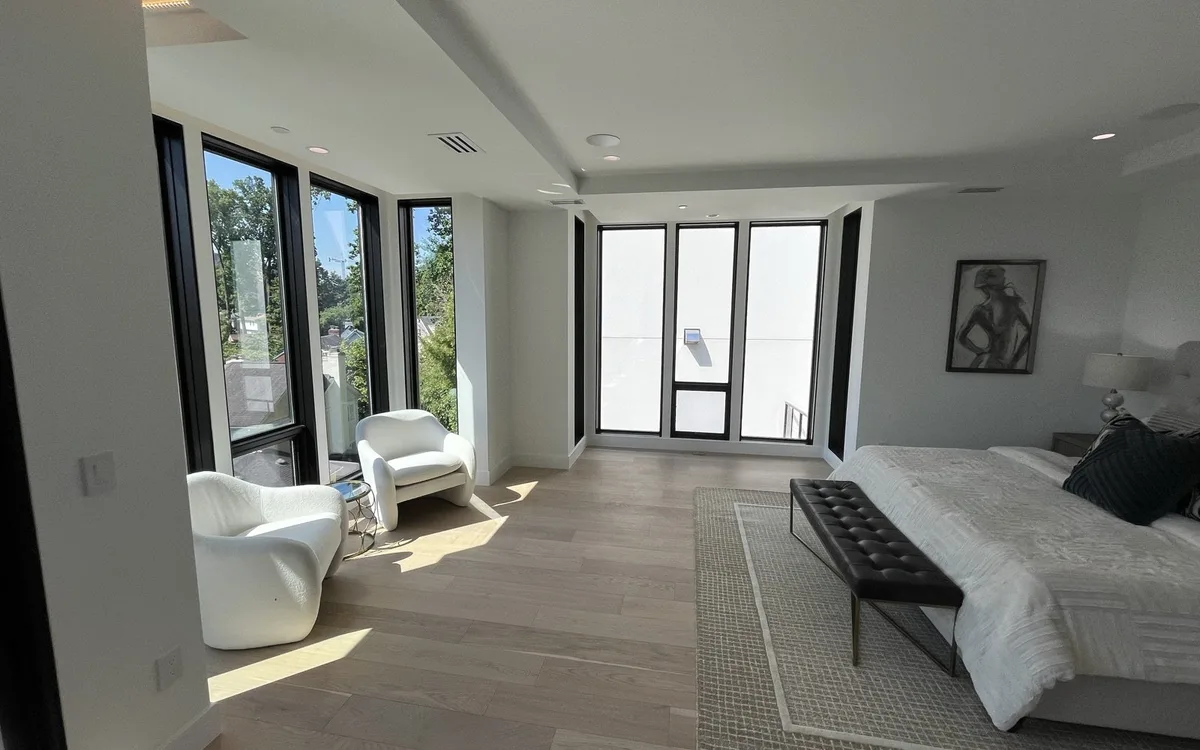
Interior painting is the most accessible home improvement project — and one of the most misunderstood. A professional paint job and a DIY paint job can look identical on day one and dramatically different by year two. In the DC, Maryland, and Virginia market, where humidity swings, older plaster walls, and builder-grade drywall all present their own challenges, the prep work and product selection matter as much as the brush technique.
Why Prep Work Is 80% of the Job
Professional painters spend the majority of their time preparing surfaces, not applying paint. That means:
- Filling cracks and nail holes: Drywall screws pop over time, especially in newer construction where the framing hasn't fully settled. All holes and imperfections should be filled with spackling compound, sanded flush, and primed before any topcoat goes on.
- Caulking gaps: The joint between trim and wall, trim and ceiling, and around door and window casings should be caulked with a paintable latex caulk. This is what gives a painted room its tight, clean look.
- Priming new or repaired surfaces: New drywall, patched areas, and surfaces switching from a dark color all require a coat of primer. Skipping primer on new drywall produces a flat, chalky finish that no topcoat can fix.
- Cleaning walls: Kitchens and bathrooms accumulate grease and mildew that cause paint to peel. A TSP substitute wash before priming is standard for these rooms.
Choosing the Right Sheen for Each Room
Paint sheen (finish) affects both appearance and durability. The right sheen depends on the room's function and the condition of the walls:
- Flat/matte: Hides surface imperfections best, but not washable. Best for low-traffic adult bedrooms and formal dining rooms where walls won't be touched often.
- Eggshell: Slight sheen, wipeable, and the most popular finish for living rooms, bedrooms, and hallways in the DMV. Hides imperfections well while allowing gentle cleaning.
- Satin: More durable and moisture-resistant than eggshell. The right choice for kitchens, bathrooms, and children's rooms where walls need regular cleaning.
- Semi-gloss and gloss: Reserved for trim, doors, and cabinetry. Highly durable, easy to clean, and resistant to moisture. The contrast between flat/eggshell walls and semi-gloss trim is a hallmark of a well-executed paint job.
What Interior Painting Costs in the DMV
Labor costs in the Northern Virginia, Maryland, and DC market are higher than national averages. Typical ranges for professionally painted interior spaces:
- Single room (walls, ceiling, trim): $400–$900 depending on size and prep required
- Whole-house interior (2,000–3,000 sq ft home): $5,000–$12,000, including prep, primer, and two finish coats
- Cabinet painting (kitchen): $1,500–$4,500 for a full kitchen cabinet repaint, including proper degreasing, sanding, and sprayed topcoat
The biggest variables are ceiling height (two-story foyers and great rooms add cost), the number of colors being used, and the condition of existing walls. A home with popcorn ceilings being scraped and repainted, or one with significant drywall repairs needed, will cost more than a clean, standard repaint.
Paint Brands Worth Specifying in DMV Homes
Not all paint is equal. In the DC area's high-humidity summers and cold, dry winters, a mid-grade or premium paint outperforms budget options over a 5–7 year window. Benjamin Moore Aura, Sherwin-Williams Emerald, and PPG Timeless are the top-tier lines that professional painters in this market rely on for adhesion, coverage, and durability. Specifying the brand and product line — not just the color — when getting bids ensures you're comparing like-to-like quotes.
Ready to Repaint?
Donya LLC is a licensed and insured design-build contractor serving Washington DC, Maryland, and Northern Virginia (MHIC #159903). Our drywall and painting service covers everything from single-room repaints to whole-home interior transformations, including drywall repair, priming, and two-coat finish work. Call (301) 337-9445 or email Reza@donyallc.com for a free estimate.