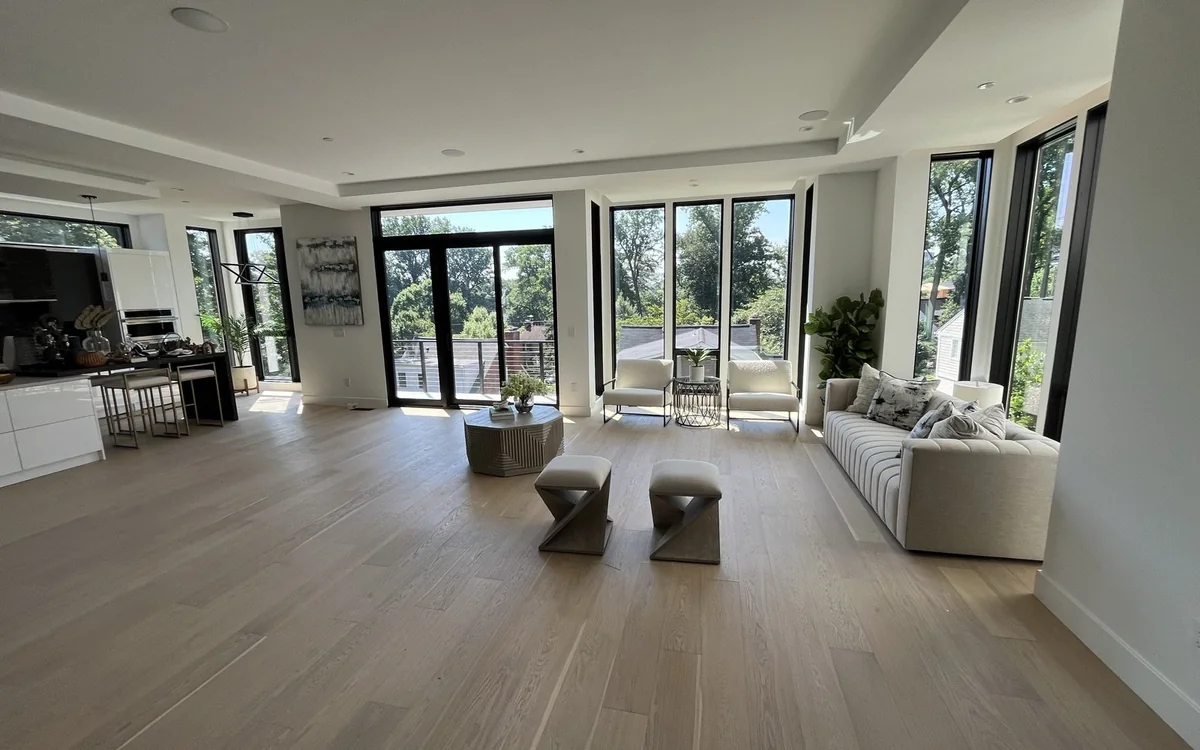
After a few years of elevated mortgage rates and constrained inventory, the DMV housing market has pushed more homeowners toward renovation rather than relocation. When moving to a larger home means giving up a 3% rate for a 6.5% one — and paying a significant premium for the privilege — a well-executed renovation starts to look like the obvious financial decision. We're seeing the result of that calculation play out in the projects coming through our door in Maryland and Virginia. Here's what's driving renovation activity in 2026 and why.
The "Forever Home" Mindset Is Driving Bigger Investments
The single most significant shift we've observed is the growing willingness of homeowners to invest seriously in a house they plan to stay in. A homeowner who thought they'd sell in five years might have put in new countertops. A homeowner who now expects to stay fifteen or twenty years is thinking about the addition, the primary suite overhaul, the full kitchen gut. When the decision is "this is the house," the calculus on renovation investment changes entirely. We're completing more projects in the $150,000–$400,000 range than we were three years ago, with more homeowners treating the renovation as a long-term asset decision rather than a cosmetic refresh.
Outdoor Living Continues to Earn Its Investment
The appetite for outdoor living space that accelerated during the pandemic has not faded. Screened porches, covered patios, and composite decks with built-in lighting and outdoor kitchens are among the most requested projects we handle across Northern Virginia and suburban Maryland. The DMV's climate — genuinely pleasant from April through October — makes functional outdoor space usable for six or more months a year. We're seeing more homeowners treat the outdoor area as an extension of the living room rather than an afterthought, which means more investment in weather protection (pergolas, retractable screens, overhead heaters) alongside the structural work.
Primary Suites: The Space People Actually Live In
Primary bedroom and bathroom upgrades have moved near the top of the priority list for homeowners in their 40s and 50s who plan to stay in their homes. After years of investing in shared spaces — kitchens, family rooms, basement finishes — we're seeing a wave of investment in the space where people actually start and end their day. The priorities: a primary bathroom with a proper curbless shower, good lighting at the vanity, and enough room to function as a real room rather than a closet retrofit; a bedroom that has adequate storage, proper HVAC zoning, and blackout capability. These aren't luxury renovations — they're quality-of-life investments in a room that was often underbuilt relative to the rest of the house.
Aging-in-Place Features Are Moving Mainstream
Five years ago, grab bars and curbless showers were almost exclusively requested by homeowners over 70. Today we're installing them for homeowners in their late 50s and early 60s who are planning ahead — and designing them to be attractive, not institutional. The framing has shifted from "accessibility feature" to "good design that works for everyone." A well-designed curbless shower with linear drain looks better than a curbed shower. A comfort-height toilet is objectively more comfortable than a standard one. Lever hardware is easier to operate with full hands. These features are increasingly on the spec sheet for primary bathroom renovations across all age groups in the DMV market.
The Projects That Are Consistently Penciling Out
In the current market, the renovations with the best combination of daily quality-of-life improvement and long-term value are: kitchen refreshes (not full guts — hardware, countertops, lighting, paint); primary bathroom overhauls; outdoor living additions; mudroom and functional entry spaces; and energy efficiency upgrades that reduce carrying costs. Full basement finishes and second-story additions make sense when the scope is driven by a real space need, not speculation about resale value. The best projects are the ones where the homeowner will benefit from the improvement every day — regardless of what happens to the market.
If you're thinking about what to do with your home in 2026 and want an honest conversation about what makes sense for your situation, we're glad to help. Reach out for a free, no-obligation consultation.