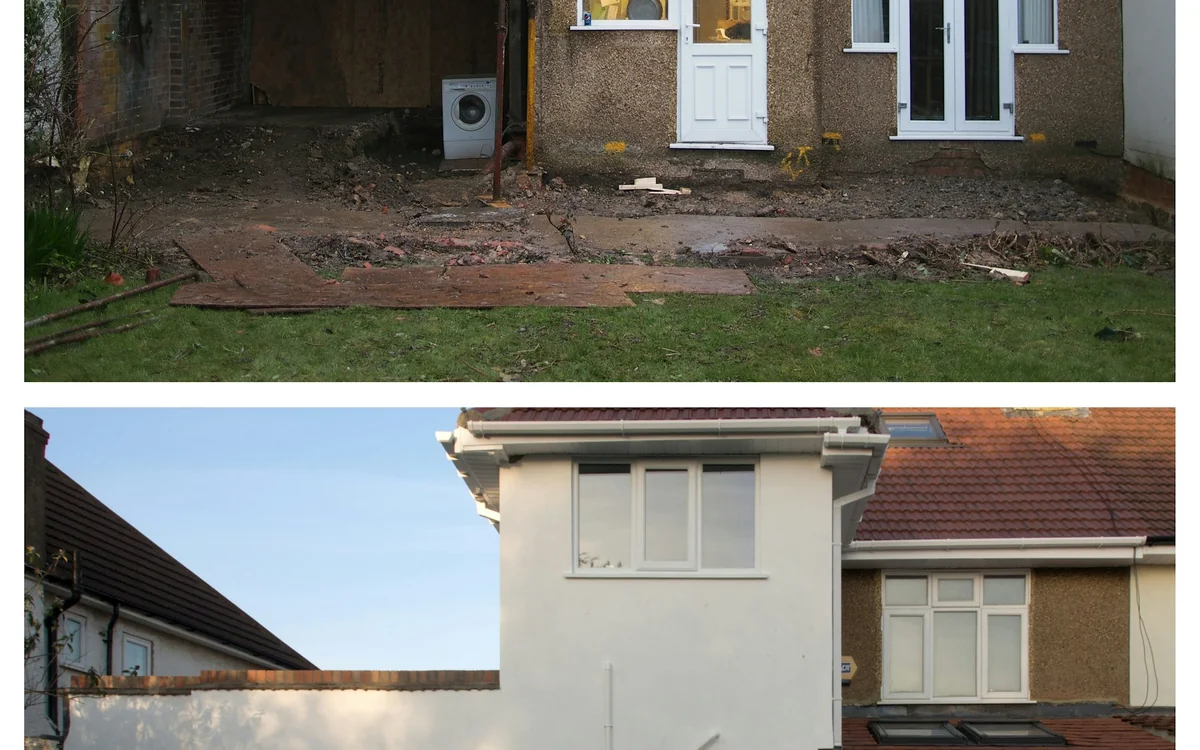
In the DMV real estate market, moving up to a larger home often means competing for limited inventory at a significant price premium — if what you want is even available in the neighborhood where you want to live. That's why home additions have become one of the most requested projects we handle across Maryland and Northern Virginia. Done right, an addition gives you the space you need while building equity in a home and community you already know. Done wrong, it creates problems that last decades. Here's what to understand before you start.
Bump-Out Additions: More Space Without a Full Addition
A bump-out extends an existing room by two to fifteen feet, typically without requiring a full foundation. They're most common on kitchens (to add an island or breakfast nook), main-floor bathrooms (to fit a double vanity), and bedrooms. Because they're smaller in scope, permits are simpler and timelines are shorter — often four to eight weeks from permit to punch-list. Cost in the DMV typically runs $25,000–$60,000 depending on size and what's inside. The key structural question is how the new floor joists tie into the existing frame; this is where an experienced contractor earns their fee by avoiding the common mistake of under-engineering the cantilever or connection point.
Single-Story Rear Additions
A rear addition is the most common full addition we build — expanding the back of the house by one story to add a family room, master suite, expanded kitchen, or in-law suite. These require a full foundation (poured concrete footings and stem wall, or slab depending on the site), and the tie-in to the existing roof is the detail that separates good work from work that leaks. Budget range in Maryland and Virginia: $150,000–$350,000 for a 400–800 sq ft addition, finished to match the existing home. Permit timelines in Montgomery County and Fairfax County can run 6–12 weeks, so we build that into the project schedule from the start.
Second-Story Additions
Adding a full second story is the highest-impact and most complex addition type. It typically means removing the existing roof, building a new floor system on top of the first-floor walls (which may need to be reinforced), framing the new second story, and re-roofing the entire structure. The upside: you roughly double the living area of the home without expanding the footprint, which matters on lots with setback restrictions. Cost typically runs $250,000–$500,000+ depending on the scope. You'll live out of the house for most of the project, so plan your displacement carefully. We work with structural engineers on every second-story addition — there are no shortcuts on the load path calculations.
Garage Conversions
Converting an attached garage into living space is one of the more cost-effective ways to gain square footage — $40,000–$90,000 is a reasonable range for a finished, conditioned room with proper insulation, flooring, electrical, and HVAC. The critical considerations in Maryland: you'll need to verify your HOA allows it, confirm that your zoning requires minimum parking counts (some jurisdictions do), and ensure the slab is properly insulated since garage slabs are typically uninsulated and cold. We add in-slab or above-slab insulation and a new flooring system in every garage conversion — it's the difference between a comfortable room and one that's cold eight months a year in the DMV climate.
What Makes an Addition Project Go Well
The additions that go smoothly share a few things: permits pulled before demolition starts, a structural engineer involved from the design phase (not called in after a problem appears), a realistic schedule that accounts for permit review times, and a contractor who's built enough of them to know where the surprises typically hide. We've done additions from Chevy Chase to McLean to Potomac, and the detail work — roof tie-ins, matching existing exterior materials, getting HVAC right — is what separates a seamless addition from one you can always tell was added on.
If you're weighing whether an addition makes sense for your home and budget, we're glad to walk the property with you and give you an honest read. Reach out for a free, no-obligation consultation.