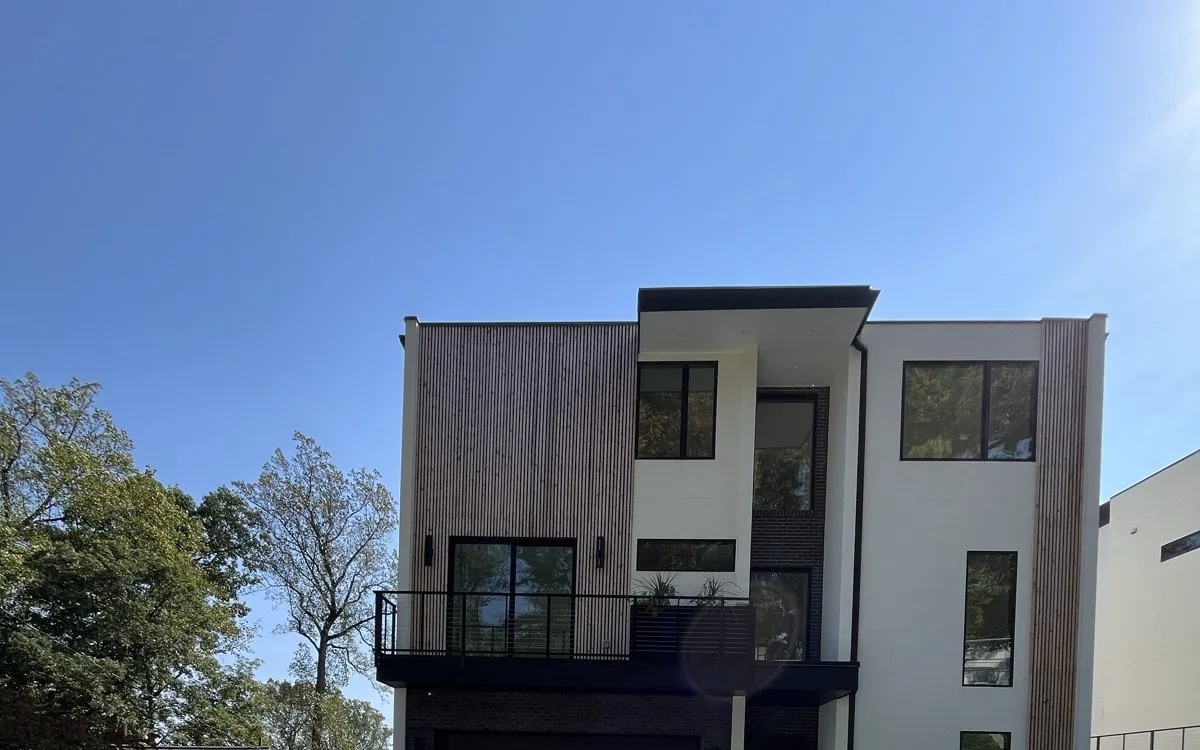
Exterior cladding is the outermost skin of a home — the layer that faces wind, rain, humidity, summer heat, and the occasional freeze-thaw cycle that characterizes DMV winters. Choosing the right material is not primarily an aesthetic decision. It's a durability and maintenance decision that plays out over 20–40 years. The visual character follows from the material choice, but the smart starting point is understanding what each option actually delivers in the Mid-Atlantic climate before committing to it.
Why Homeowners Replace Exterior Cladding
The most common drivers of exterior cladding replacement in the DC, Maryland, and Virginia market are:
- Rotting or deteriorating wood siding (particularly on homes from the 1960s–1980s with original cedar or pine lap siding)
- Failing vinyl siding — cracked panels, faded color, moisture intrusion behind the siding layer
- A major renovation that changes the home's profile or adds square footage, making the original cladding inconsistent or undersized
- Desire for a significant aesthetic change — particularly the shift toward contemporary exterior profiles popular in Northern Virginia and inner-ring DC suburbs
The Main Options: How They Compare
Fiber Cement (James Hardie and Equivalents)
Fiber cement is the dominant replacement siding product in the DMV residential market for good reason: it performs. A composite of cement, sand, and cellulose fibers, it is dimensionally stable in humidity, does not rot, does not attract insects, holds paint well, and is available in lap siding, vertical board-and-batten, and large-panel formats that suit contemporary profiles. The factory-primed or pre-finished (ColorPlus) products carry 15-year paint finish warranties.
The limitation is weight — fiber cement is roughly 2.5x heavier than vinyl — which adds installation time and labor cost, and occasionally requires assessment of the wall framing before installation. Cost installed: $8–$14 per sq ft depending on profile and whether existing siding is removed.
Stucco (Traditional and Synthetic)
Traditional three-coat stucco — wire lath, scratch coat, brown coat, finish coat — is the longest-lived exterior finish available, with properly maintained stucco on brick or concrete block lasting 50+ years. It is the canonical finish for Mediterranean, Spanish Colonial, and modern minimalist homes. In the DMV market, stucco is particularly appropriate for contemporary new construction and additions where a monolithic, seamless exterior is the design intent.
The risk with stucco on wood-framed construction is moisture management: improperly detailed stucco, particularly older EIFS (exterior insulation and finish systems), can trap moisture against the sheathing and cause extensive hidden rot. Properly installed stucco with a drainage plane and correctly detailed penetrations (windows, doors, utility penetrations) performs well. Synthetic stucco (acrylic-based finishes) is more flexible and somewhat more forgiving of minor cracking. Cost installed: $10–$18 per sq ft for a three-coat system on new substrate.
Engineered Wood and Vertical Slat Siding
Engineered wood products — LP SmartSide and similar — use strand wood treated with zinc borate and resins to resist rot and insects, then factory-primed. They offer the warm visual character of real wood at significantly lower cost and maintenance requirement. Available in lap siding and shiplap profiles, engineered wood is lighter than fiber cement and easier to cut and install around complex geometries.
Vertical slat cladding — whether solid cedar, pressure-treated pine, or composite — has become a defining element of contemporary home exteriors in the DMV market. Vertical grain orientation improves weather resistance compared to horizontal siding, and the shadow lines created by slat profiles add depth and texture to flat facades. Real cedar requires periodic sealing or staining (every 3–5 years in the DMV); composite slat products reduce maintenance. Cost installed: $7–$16 per sq ft depending on material and profile complexity.
Brick Veneer
Brick veneer — a single wythe of brick applied over a structural wall — is the exterior cladding most associated with established DMV neighborhoods from Bethesda and Chevy Chase to Old Town Alexandria and Capitol Hill. Brick veneer is essentially maintenance-free once properly installed (the mortar joints may need repointing after 25–40 years) and holds its value well in markets where brick is the predominant aesthetic.
The limitation is cost and weight: brick veneer requires a ledger or footing to support it structurally and adds significant load to the foundation. It is most practical as new construction or when the original cladding is being completely removed. Cost installed: $16–$30 per sq ft.
DMV Climate Factors That Affect Your Choice
- Humidity and moisture: The Mid-Atlantic's high summer humidity makes vapor management behind any cladding layer critical. A proper drainage plane (housewrap and a drainage gap between cladding and sheathing) is non-negotiable on any re-siding project.
- Freeze-thaw cycles: Products that absorb moisture — real wood, improperly sealed fiber cement — can fail at painted joints and panel edges as moisture expands and contracts with temperature changes.
- Wood-boring insects: Termites and carpenter bees are active across the DMV. Real wood cladding requires chemical treatment or barrier protection; fiber cement, stucco, and brick are not affected.
- HOA and historic district restrictions: Many DMV jurisdictions — particularly in DC, Montgomery County, and Arlington — have design review processes for exterior changes. Confirming permissibility before selecting a material is essential.
What a Re-Siding Project Costs in the DMV
- Fiber cement re-siding (1,500 sq ft of wall area): $15,000–$25,000 installed, including removal of existing siding and new housewrap
- Stucco over new substrate (1,500 sq ft): $18,000–$32,000
- Engineered wood or composite vertical siding: $13,000–$28,000 for the same scope
- Brick veneer addition (partial, new addition only): $12,000–$25,000 for 400–600 sq ft
Ready to Transform Your Home's Exterior?
Donya LLC is a licensed and insured design-build contractor serving Washington DC, Maryland, and Northern Virginia (MHIC #159903). Our exterior renovation service covers cladding replacement, window integration, and complete exterior redesign. Call (301) 337-9445 or email Reza@donyallc.com for a free on-site estimate.